2000 photos - One bee
🌟 The Spark (Conception)
The Vision:
It was a very hot, sunny day, with the temperature up in the 30s. At this time of year, the Kingfishers are starting to show more regularly on the reserve, which also means the hides get very busy.
Today was no exception.
I stood in the hide for about half an hour and had one visit from the Kingfisher. It landed on the perch, sat there for a moment and then flew off. It was a nice photograph to take, but I've been photographing on the reserve for a number of years and I've taken that photograph before.
I don't begrudge the other photographers their enjoyment of seeing that flash of blue and orange. That's part of what makes photographing wildlife enjoyable. But I was after something else — something different and, for me, more rewarding.
The Planning:
When the sun is in full power, I like to take advantage of it. It gives me the opportunity to use higher shutter speeds and, depending on the subject, lower ISO settings.
Yes, I know you're supposed to take photographs in the early morning or evening "Golden Hour", and that once midday arrives it's time to pack the camera away and take a siesta.
I agree that morning and evening light can be fantastic. You can get those moody backlit photographs or a lovely golden glow across the subject.
But I come from the other camp: work with what you've got and use it to your advantage.
That's how I learn, improve my skills and push the envelope. And at the end of the day, they're only images on the card. You can format the card and start again.
And yes, I'm not a back-button focus user, so I'm used to breaking all the rules. But that's probably a discussion for another blog post.
📸 The Setup (Preparation)
In the Bag:
I didn't have my macro setup with me. I was using my Sony 200-600mm, and to be honest, my macro setup wouldn't have worked for the photographs I was after anyway.
My main body was the Sony A7R IV, which had been my only camera body for the last five years. I know this camera inside and out, which is important when you're trying something that is already difficult enough.
The 200-600mm has a minimum focusing distance of 2.4 metres. When you're trying to photograph a small bee, that feels like miles away. You keep stepping backwards, then backwards some more, just to get the bee into focus.
But I already knew what I wanted to try.
The Settings:
I had the camera set to Auto ISO, with a maximum ISO of 3200. The 61MP sensor is fantastic, but pushing the ISO too far starts to deteriorate the image, and that reduces how aggressively I can crop afterwards.
I manually adjust the aperture and shutter speed depending on the situation and the subject.
For this attempt I needed a shutter speed of 1/4000 sec to freeze the action. From experience, f/8 works, but f/10 works even better when I'm trying to use the 200-600mm almost like a macro lens at its minimum focusing distance.
And this is where the midday sun comes into its own.
I'm also using the electronic shutter. I already know I'm going to get rolling shutter distortion in the bee's wings because the A7R IV has a slow — really slow — sensor readout speed. But there are ways of gaining some readout speed back through the camera settings, and I was prepared to accept the limitations.
The A7R IV doesn't have any of the newer AI-based tricks or pre-capture features, so the technique is basically "spray and pray".
Well, spray, anyway. I've done this before, so the praying isn't really necessary.
The technique is to use Small Spot tracking, lock onto the bee and then let the camera continue tracking it until it leaves the flower.
Yes, you read that correctly.
I'm photographing the bee as it leaves the flower, not as it arrives.
But when you look at the final photograph, you perceive the bee as if it is arriving at the flower.
⏱️ The Moment (Execution)
On Location:
So there I was, 2.4 metres away, with a tiny bee somewhere in the frame, sitting in the midday sun.
Why do we do this again?
The bee landed on the flower. I locked focus onto it and held the shutter down.
Around 200 frames later, the buffer filled.
And the bee was still sitting on the flower.
This is where you start doing the maths:
Speed vs buffer vs memory card capacity vs why the bee won't actually fly.
But we work with what we have.
I switched the camera into APS-C mode. This dropped the resolution to around 26MP, but it gave me three advantages.
First, the bee became larger in the frame.
Second, I was now using a much smaller area of the sensor, which considerably shortened the readout time.
Third, the smaller files meant the buffer lasted much longer.
Now I just needed the bee to actually fly while I still had room left in the buffer.
Unlike a movie set, however, the bee hadn't read the script and wasn't following the directions.
Eventually — hooray! — the bee flew.
Unfortunately, it flew in completely the wrong direction.
It wasn't following the focus plan either.
The gauntlet had been thrown down.
I'm never one to back away from a challenge, and there is the idea behind the Infinite Monkey Theorem: given enough time, a monkey randomly hitting keys on a typewriter would eventually produce the complete works of Shakespeare.
Well, I didn't need Shakespeare.
I only needed the first page.
Actually, one correct sentence would do.
The RAW Capture:
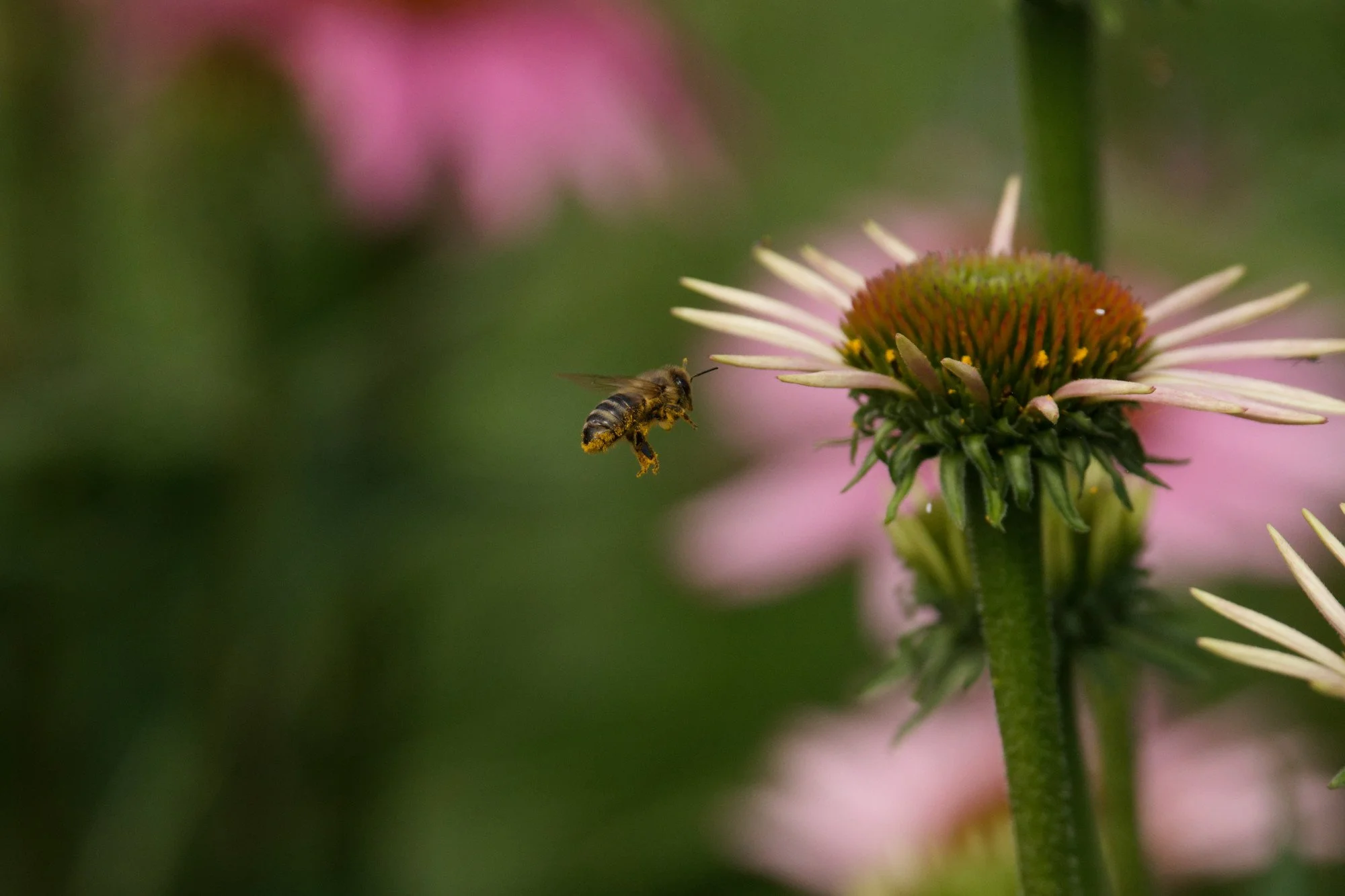
Sony A7RIV - 200-600mm - F/8 - 1/4000 - ISO-1600 - APSC - Handheld
🖥️ The Digital Darkroom (Processing)
First Corrections:
I use DXO PhotoLab to process all my RAW files and carry out all my adjustments.
I've created a custom preset that is applied to all my RAW files. This gives me a consistent starting point before I begin working on the individual photograph.
The preset applies:
-30 Highlights
DXO ClearView Plus +10
+5 Black on the Tone Curve
DeepPRIME XD/XD2s
Lens Sharpness Optimization Global 1.0
This gives me a good base image to work from.
Local Adjustments:
This particular image didn't need any additional local adjustments in DXO PhotoLab.
Sharpening:
Once the image was finished in DXO PhotoLab, I exported it as a JPEG.
The JPEG was then passed through Topaz Photo using a custom, low-strength sharpening profile that I've created.
🖼️ The Final Frame (Completion)
The Finished Piece:
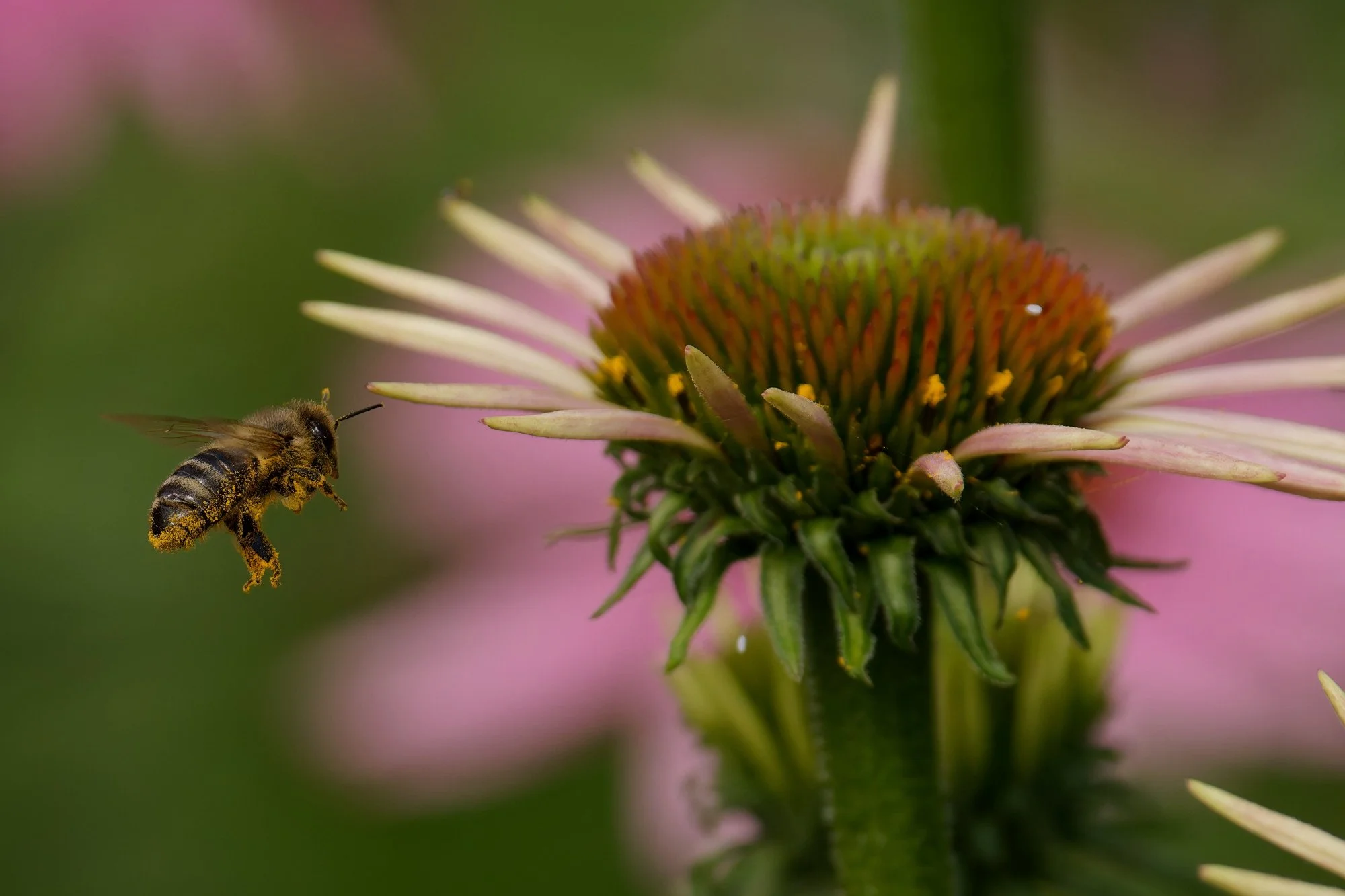
Key Takeaways:
Watching the bee was far more important than pressing the shutter.
Once I'd realised that it never stayed on a flower for more than two or three seconds, the challenge stopped being purely about luck and became much more about timing.
The camera still had to do its job, and there were plenty of technical limitations to work around. The slow sensor readout, the buffer, the minimum focusing distance and the direction the bee eventually chose to fly all had an influence on what I could capture.
But the photograph was made long before I filled the buffer.
It was made by watching the bee, understanding what it was doing and then working out how I could use the equipment I had with me to give myself the best possible chance.
Sometimes you don't need the perfect conditions, the perfect camera or the perfect setup.
Sometimes you just need to work with what you've got — and keep pressing the shutter until the bee finally gives you the sentence you're looking for.